- Evidence level
- Strong
- Category
- Protein
- Typical dose
- 1.0–1.2 g per kg of body weight daily for older adults; 1.6–2.2 g per kg for those training for muscle. Spread across meals at roughly 25–30 g each.
- How long it takes
- Muscle preservation effects accumulate over months alongside resistance training.
What protein is
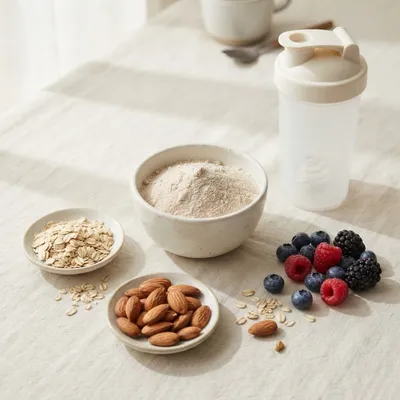
Protein supplements are simply concentrated food. Their value is practical: hitting a daily protein target through whole food alone is difficult for older adults with reduced appetite, and for anyone eating at a deficit. Protein is also the most satiating macronutrient and the one that protects lean muscle while you are losing weight.
What it is commonly used for
These are the uses with published human research behind them, in rough order of how well supported they are. Being on this list means a claim has been studied — not that it has been settled.
- Preserving muscle during weight loss
- Countering age-related muscle loss
- Satiety and appetite control
- Recovery after resistance training

Forms, and which one to buy
Form is where most of the money is won or lost with protein. Two products can list the same ingredient and deliver very different amounts of it.
| Form | What it means in practice |
|---|---|
| Whey concentrate | Best value. Around 80% protein with some lactose. |
| Whey isolate | Around 90% protein, minimal lactose. Suits lactose sensitivity. |
| Casein | Digests slowly. Often taken in the evening. |
| Soy, pea, rice blends | Plant options. Pea and rice combined give a more complete amino acid profile than either alone. |
Dosage and timing
1.0–1.2 g per kg of body weight daily for older adults; 1.6–2.2 g per kg for those training for muscle. Spread across meals at roughly 25–30 g each.
Muscle preservation effects accumulate over months alongside resistance training.
Side effects, interactions and who should avoid it
Possible side effects
- Digestive discomfort with whey concentrate if you are lactose sensitive
Drug interactions
- None significant established
Not suitable for
- People with advanced kidney disease, who need protein intake managed medically
This is not a complete list. If you take prescription medication, a pharmacist can check your full record against any supplement in a few minutes.

Goals this ingredient is used for
Healthy Aging
Protein plus resistance training beats every capsule for staying independent
Weight Management
Only three real mechanisms: satiety, glucose handling, small energy expenditure
Frequently asked questions
How much protein do I need?
Is protein powder bad for your kidneys?
Plant or whey protein?

Sources
We link to primary literature and to national health bodies rather than to other supplement sites. Where a link points to a PubMed search rather than a single paper, that is deliberate — it shows you the whole body of work rather than the one study that happens to support a sales page.