

What joint support actually involves
Joints get uncomfortable for several different reasons, and the reason decides whether a supplement is even the right tool. Wear on cartilage, inflammation in the joint lining, stiffness from sitting still for hours, and soreness after unfamiliar exercise all feel similar from the inside and respond to completely different things.
A supplement can plausibly help with two of those: supplying the raw materials connective tissue is built from, and moderating low-grade inflammation. It cannot rebuild worn cartilage, and any product suggesting otherwise is describing something no capsule has been shown to do.
Give any day-to-day joint care time. Joint comfort naturally varies from week to week, which is why the trials that matter run for three months or more — and why a full course, rather than a few days, is the fair way to judge how a product suits you.

Ingredients used for joint support, and what the evidence says
Each row gives the evidence level as we read it, plus the practical detail that usually decides whether a product works — the form, the dose, or the caveat.
| Ingredient | Evidence | What matters in practice |
|---|---|---|
| Collagen peptides | Moderate | Hydrolysed type II collagen at 10 g daily has produced small but repeatable improvements in joint comfort in athletes and older adults. It takes about three months. |
| Curcumin (from turmeric) | Moderate | Several trials put curcumin close to over-the-counter anti-inflammatories for knee comfort. Absorption is the catch — plain turmeric powder does almost nothing without piperine or a lipid carrier. |
| Omega-3 (EPA/DHA) | Moderate | Best evidence is in inflammatory joint conditions rather than ordinary wear. Doses that worked were 2–3 g of combined EPA and DHA — far above a standard one-capsule serving. |
| Vitamin D | Moderate | Correcting a genuine deficiency helps muscle and bone function. Topping up when you are already replete does not. Worth a blood test rather than a guess. |
| Glucosamine and chondroitin | Limited | One of the most widely used joint ingredients, studied mostly as glucosamine sulfate. Some people report benefit. |
| Vitamin K2 (MK-7) | Limited | Directs calcium into bone rather than soft tissue. Interesting mechanism, thin clinical evidence for joint comfort specifically. Interacts with warfarin. |
| MSM | Limited | A sulfur compound with a few small positive trials and no large confirmation. |
Full ingredient guides for this goal

Vitamin D
1,000–2,000 IU (25–50 µg) daily is typical for maintenance in adults
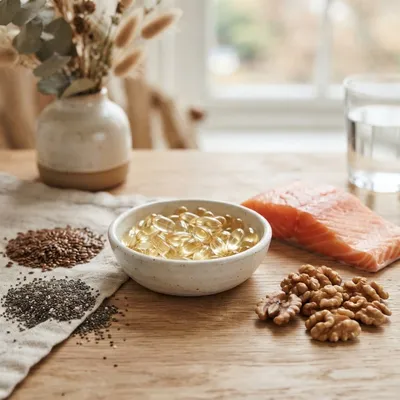
Omega-3 (EPA & DHA)
Roughly 250–500 mg combined EPA+DHA daily for general intake

Collagen peptides
10 g daily of hydrolysed peptides for joints, or 2
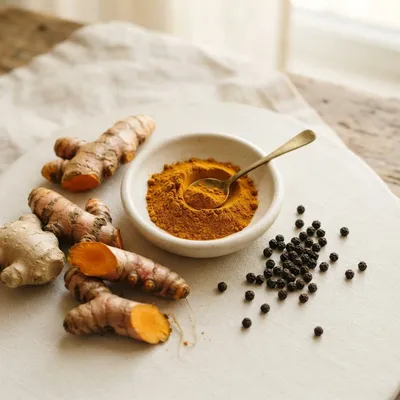
Turmeric & curcumin
500–1,000 mg of curcuminoids daily, in an enhanced-absorption form, taken with food containing fat

Glucosamine
1,500 mg of glucosamine sulfate daily, usually as a single dose

Cat’s claw
250–350 mg daily of standardized extract in the small trials available

Who should be careful
These are the interactions and situations that come up most often for this goal. They are not a complete list — your pharmacist has your full medication record and can check it in a couple of minutes, for free.
- Curcumin and omega-3 both have mild blood-thinning effects. If you take warfarin, apixaban or a similar anticoagulant, clear them with your doctor first.
- Vitamin K2 directly opposes how warfarin works. This is a genuine interaction, not a theoretical one.
- Glucosamine is usually made from shellfish. If you have a shellfish allergy, check the source.
- Give any joint supplement a full 90 days before deciding. The trials that found effects almost all needed that long.
See a healthcare professional if you notice
- A joint that is hot, red and swollen — that needs same-week medical attention, not a supplement
- Pain that wakes you at night or does not settle with rest
- A joint that locks, gives way or will not straighten
- Joint pain alongside fever or unexplained weight loss
Products reviewed for joint support
Scored on our published model. Note how often the score is decided by whether the brand publishes its formula at all.

Frequently asked questions
How long before a joint supplement does anything?
Is collagen or glucosamine the better choice?
Can a supplement rebuild worn cartilage?
Do I need to take joint supplements with food?

Where to go next
Once you know which ingredients matter for this goal, the next questions are usually the same two: which specific product publishes enough to be worth buying, and where you can actually get it. Our product reviews answer the first, and the country guides answer the second.
Vision Support
AREDS2 doses: 10 mg lutein, 2 mg zeaxanthin, 25 mg zinc, 2 mg copper, 500 mg vitamin C, 400 IU vitamin E
Focus & Memory
Bacopa: about 300 mg standardized extract, 12 weeks, with food
Weight Management
Only three real mechanisms: satiety, glucose handling, small energy expenditure
Blood Sugar Support
Berberine has the best evidence and the heaviest interaction list — pharmacist first