

What vision support actually involves
Two different concerns get sold under the same heading. One is age-related change in the macula, the small central part of the retina you read with. The other is everyday eye strain from screens — tiredness, dryness, difficulty refocusing. They involve different tissue and different evidence.
The macular research is the strong one. The AREDS2 trial tested a specific combination — lutein, zeaxanthin, vitamin C, vitamin E, zinc and copper — in people who already had intermediate age-related macular degeneration. It slowed progression in that group. It was never shown to prevent the condition in healthy eyes, which is the leap most marketing makes.
Screen strain is a smaller and softer literature. Astaxanthin has a handful of trials on accommodation and eye fatigue, mostly from Japan, mostly small. It is a reasonable thing to try; it is not the same tier of evidence.
One thing no eye supplement does is change your prescription. If print is getting harder to read, that is a refractive change and it needs an optometrist, not a capsule.

Ingredients used for vision support, and what the evidence says
Each row gives the evidence level as we read it, plus the practical detail that usually decides whether a product works — the form, the dose, or the caveat.
| Ingredient | Evidence | What matters in practice |
|---|---|---|
| Lutein and zeaxanthin | Strong | The two carotenoids that physically concentrate in the macula. AREDS2 used 10 mg lutein and 2 mg zeaxanthin daily. The best-evidenced pair in eye health. |
| Zinc | Strong | Part of the original AREDS formula at 80 mg, later reduced to 25 mg with equal effect. High zinc depletes copper, which is why AREDS included copper alongside it. |
| Vitamin C and vitamin E | Moderate | The antioxidant half of AREDS — 500 mg C and 400 IU E. Neither has shown much on its own; they were tested as part of the combination. |
| Astaxanthin | Limited | A red algal carotenoid with several small trials on eye fatigue and focusing. Typical doses were 6–12 mg daily. Promising rather than proven. |
| Omega-3 (DHA) | Limited | DHA is structurally abundant in the retina, but AREDS2 added omega-3 and found no extra benefit. It remains reasonable for dry eye. |
| Bilberry / anthocyanins | Early | A persistent night-vision story traced to World War II pilot anecdotes. Controlled trials have not supported it. |
| Marine algae (kelp, wakame, chlorella) | Early | Sold as whole-food nutrient sources. Little direct eye-specific research. Kelp is iodine-rich, which matters for thyroid. |
Full ingredient guides for this goal

Omega-3 (EPA & DHA)
Roughly 250–500 mg combined EPA+DHA daily for general intake

Zinc
8–11 mg daily meets normal requirements
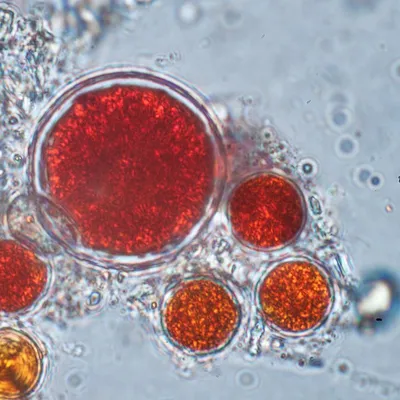
Astaxanthin
4–12 mg daily

Kelp
Adult iodine requirement is 150 µg daily; the upper limit is 1,100 µg

Wakame
No established supplemental dose
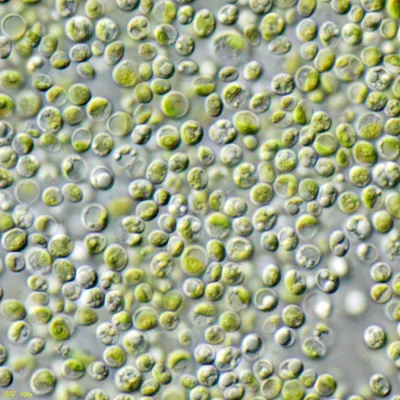
Chlorella
2–3 g daily in most trials

Ecklonia cava
No established dose

Lutein & zeaxanthin
10 mg lutein and 2 mg zeaxanthin daily — the AREDS2 amounts

Who should be careful
These are the interactions and situations that come up most often for this goal. They are not a complete list — your pharmacist has your full medication record and can check it in a couple of minutes, for free.
- Smokers and recent ex-smokers should avoid high-dose beta-carotene: two large trials found increased lung cancer risk. AREDS2 replaced it with lutein for exactly this reason.
- Zinc above 40 mg daily for long periods depletes copper. AREDS paired 25 mg zinc with 2 mg copper.
- Kelp is a concentrated iodine source. If you have any thyroid condition, check with your doctor first.
- Vitamin A and vitamin E are fat-soluble and accumulate. Stacking an eye formula on top of a multivitamin is easy to do accidentally.
See a healthcare professional if you notice
- Sudden vision loss, or a curtain or shadow across your field of view — this is an emergency
- New floaters or flashes of light appearing together
- Straight lines starting to look wavy or bent
- Eye pain with redness, or a noticeable drop in vision in one eye

Frequently asked questions
Do eye supplements prevent macular degeneration?
Lutein or astaxanthin — which should I take?
Can a supplement reduce how much I need my glasses?
Is it safe to take an eye formula with a multivitamin?

Where to go next
Once you know which ingredients matter for this goal, the next questions are usually the same two: which specific product publishes enough to be worth buying, and where you can actually get it. Our product reviews answer the first, and the country guides answer the second.
Joint Support
Collagen and curcumin have the most consistent human evidence — and both need about 3 months
Focus & Memory
Bacopa: about 300 mg standardized extract, 12 weeks, with food
Weight Management
Only three real mechanisms: satiety, glucose handling, small energy expenditure
Blood Sugar Support
Berberine has the best evidence and the heaviest interaction list — pharmacist first