- Evidence level
- Limited
- Category
- Marine
- Typical dose
- 4–12 mg daily. Eye-focused trials clustered around 6–12 mg.
- How long it takes
- Eye fatigue trials generally ran 4 weeks.
What astaxanthin is
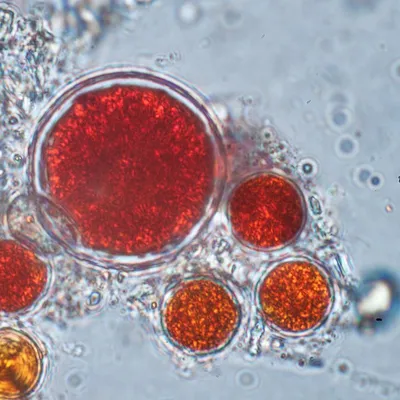
Astaxanthin is a red-orange carotenoid produced by the microalga Haematococcus pluvialis. It is what makes salmon, trout and flamingos pink — they get it by eating algae or the creatures that eat it. Unlike most antioxidants it spans the cell membrane, which is the usual explanation for its unusual stability. Eye research focuses on accommodation and fatigue.
What it is commonly used for
These are the uses with published human research behind them, in rough order of how well supported they are. Being on this list means a claim has been studied — not that it has been settled.
- Eye strain and focusing fatigue
- Skin protection from UV
- Exercise recovery
- General antioxidant intake

Forms, and which one to buy
Form is where most of the money is won or lost with astaxanthin. Two products can list the same ingredient and deliver very different amounts of it.
| Form | What it means in practice |
|---|---|
| Natural (H. pluvialis) | The algal source used in the research. Look for this rather than synthetic. |
| Synthetic | Petrochemical-derived, used mostly in aquaculture feed. Not what the human trials tested. |
| Krill-derived | A minor component of krill oil, at much lower amounts than a dedicated supplement. |
Dosage and timing
4–12 mg daily. Eye-focused trials clustered around 6–12 mg.
Eye fatigue trials generally ran 4 weeks.
Side effects, interactions and who should avoid it
Possible side effects
- A mild orange tint to the skin at very high doses
- Generally well tolerated
Drug interactions
- May add to blood-pressure-lowering medication
- Theoretical interaction with 5-alpha-reductase inhibitors
Not suitable for
- People allergic to algae or, where krill-derived, to shellfish
This is not a complete list. If you take prescription medication, a pharmacist can check your full record against any supplement in a few minutes.

Goals this ingredient is used for
Vision Support
AREDS2 doses: 10 mg lutein, 2 mg zeaxanthin, 25 mg zinc, 2 mg copper, 500 mg vitamin C, 400 IU vitamin E
Healthy Aging
Protein plus resistance training beats every capsule for staying independent
Frequently asked questions
Does astaxanthin help with eye strain?
Is astaxanthin better than lutein?
Is natural astaxanthin better than synthetic?

Sources
We link to primary literature and to national health bodies rather than to other supplement sites. Where a link points to a PubMed search rather than a single paper, that is deliberate — it shows you the whole body of work rather than the one study that happens to support a sales page.