
What prostate support actually involves
The prostate enlarges gradually in most men from around forty, and that is ordinary biology rather than disease. When it starts affecting urinary flow, the symptoms are familiar: a weaker stream, needing to go more often, getting up at night, a sense of not fully emptying.
Here is the part that matters more than any ingredient. Those exact symptoms can come from benign enlargement, from infection, from a bladder problem or, less often, from something more serious. They feel identical from the inside. A supplement taken instead of getting assessed can delay a diagnosis, and that is the real risk in this category — not the capsule itself.
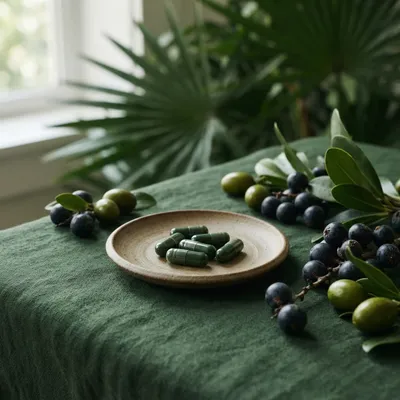
Once you have been assessed, botanical support is a reasonable thing to consider. Saw palmetto is the most-studied, though the picture is genuinely divided: several European trials found benefit, while two large well-run American trials found none. One likely explanation is extract quality — the trials that worked used a specific standardized lipid extract, and much of what is sold is not that.
Pygeum and nettle are almost always used alongside saw palmetto rather than alone, and most of their evidence comes from combination products.

Ingredients used for prostate support, and what the evidence says
Each row gives the evidence level as we read it, plus the practical detail that usually decides whether a product works — the form, the dose, or the caveat.
| Ingredient | Evidence | What matters in practice |
|---|---|---|
| Saw palmetto (Serenoa repens) | Moderate | The category standard at 320 mg daily of a standardized lipid extract. European trials positive, large US trials negative — extract quality is the likely difference. |
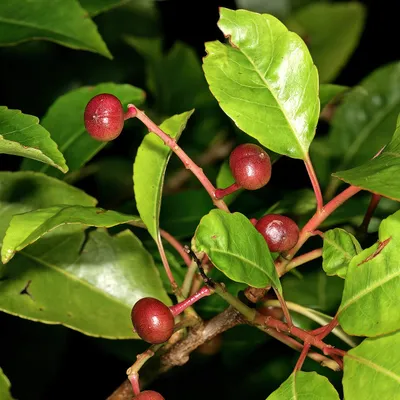
| Pygeum africanum | Limited | African plum bark used in European formulas for decades, typically 100–200 mg. Wild harvesting raises real sustainability concerns. |
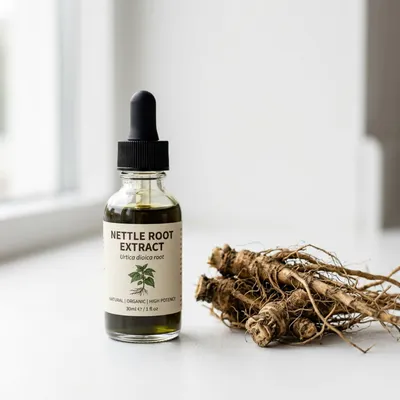
| Stinging nettle root | Limited | Almost always studied in combination with saw palmetto rather than alone. |
| Beta-sitosterol | Moderate | A plant sterol with some of the more consistent trial data in this category, at 60–130 mg daily. |
| Zinc | Limited | Concentrated in prostate tissue, which is often cited as the rationale. Supplementation evidence is thin. |
| Cat’s claw | Early | An Amazonian vine studied for immune modulation. May interact with immunosuppressant medication. |
| Soursop (graviola) | Early | Little prostate-specific evidence, and long-term high intake has raised neurological safety questions in research. |
Full ingredient guides for this goal
Saw palmetto
320 mg daily of a standardized lipid extract, either once or as 160 mg twice daily
Pygeum africanum
100–200 mg daily of standardized bark extract
Stinging nettle root
300–600 mg daily of root extract

Red raspberry
No established dose
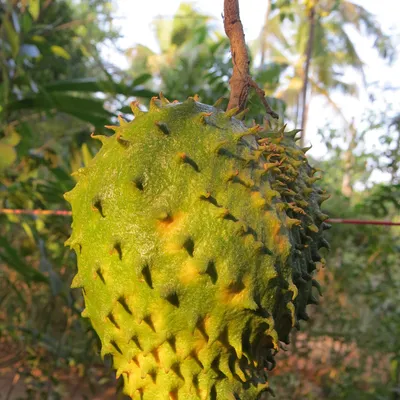
Soursop (graviola)
No established supplemental dose
Cat’s claw
250–350 mg daily of standardized extract in the small trials available

Who should be careful
These are the interactions and situations that come up most often for this goal. They are not a complete list — your pharmacist has your full medication record and can check it in a couple of minutes, for free.
- Get urinary symptoms assessed before treating them yourself. A supplement can mask a change that needs a diagnosis.
- Saw palmetto can lower PSA readings, which may interfere with prostate screening. Tell your doctor you are taking it.
- If you already take finasteride, dutasteride or an alpha-blocker, do not add a botanical formula without medical advice.
- Cat’s claw may interact with immunosuppressant medication.
- Extract standardization matters more here than in any other category. "Saw palmetto powder" is not the same as the standardized lipid extract used in trials.
See a healthcare professional if you notice
- Blood in urine or semen — always get this checked
- Being unable to pass urine at all, which is an emergency
- Painful urination or fever alongside urinary symptoms
- Any new urinary symptom that has not been assessed by a doctor

Compare the options
Frequently asked questions
Does saw palmetto actually work?
Can a prostate supplement shrink an enlarged prostate?
Will saw palmetto affect my PSA test?
How long should I give it?

Where to go next
Once you know which ingredients matter for this goal, the next questions are usually the same two: which specific product publishes enough to be worth buying, and where you can actually get it. Our product reviews answer the first, and the country guides answer the second.
Joint Support
Collagen and curcumin have the most consistent human evidence — and both need about 3 months
Vision Support
AREDS2 doses: 10 mg lutein, 2 mg zeaxanthin, 25 mg zinc, 2 mg copper, 500 mg vitamin C, 400 IU vitamin E
Focus & Memory
Bacopa: about 300 mg standardized extract, 12 weeks, with food
Weight Management
Only three real mechanisms: satiety, glucose handling, small energy expenditure